Sunday, July 18, 2010

of Storks and Dirt Pits and Rainbows

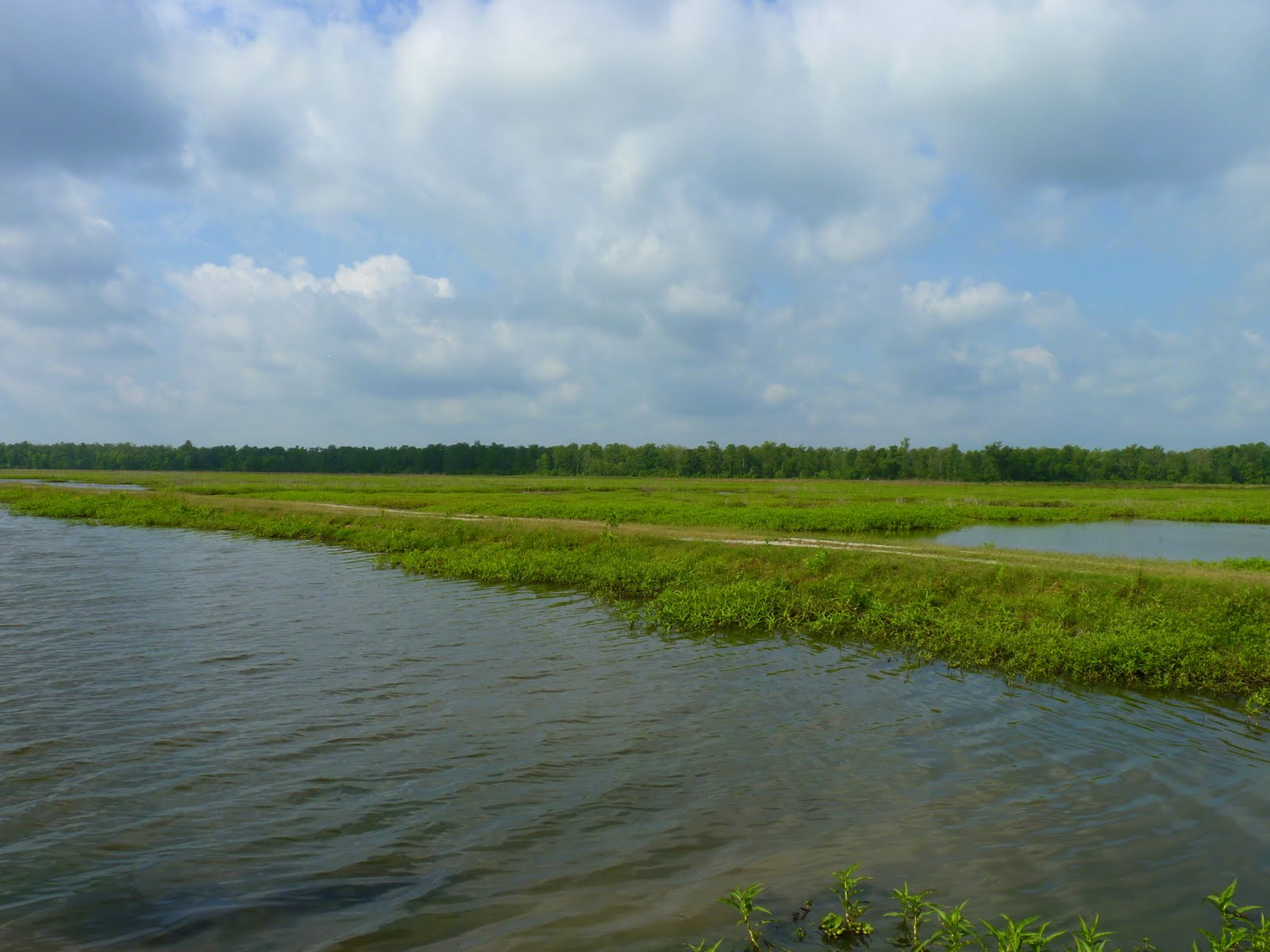
Unfortunately, even though Baton Rouge is located prominently on the largest river in North America, which also happens to be the pivotal feature of one of the largest bird migration flyways in North America, there is very little natural habitat left by the river in our immediate area. To man, rivers mean industry and transportation, and Baton Rouge is a prime example of these uses. The river itself produces material for man to use...sand and silt that flow down river are harvested for construction, industry, and agriculture. It would be nice if we had some natural riparian habitat left for resident and migrating birds, but instead they must make do with what we've left them.


Richfield Riversilt is a working dirt pit just south of Baton Rouge, located on a bend in the river. Natural sand and silt deposits make it a prime spot for this use. I don't have a good sense of area, but it's probably a couple hundred acres all tolled. There are no trails, no rest rooms, no amenities of any kind. There is a construction trailer and heavy equipment.

But the owners are "bird friendly" and since the birds use the area despite the heavily disturbed habitat, AND since this spot is close enough to Baton Rouge to dash out on an impromptu field trip, it's a popular place for Baton Rouge birders. With permission, of course, since it is private property.


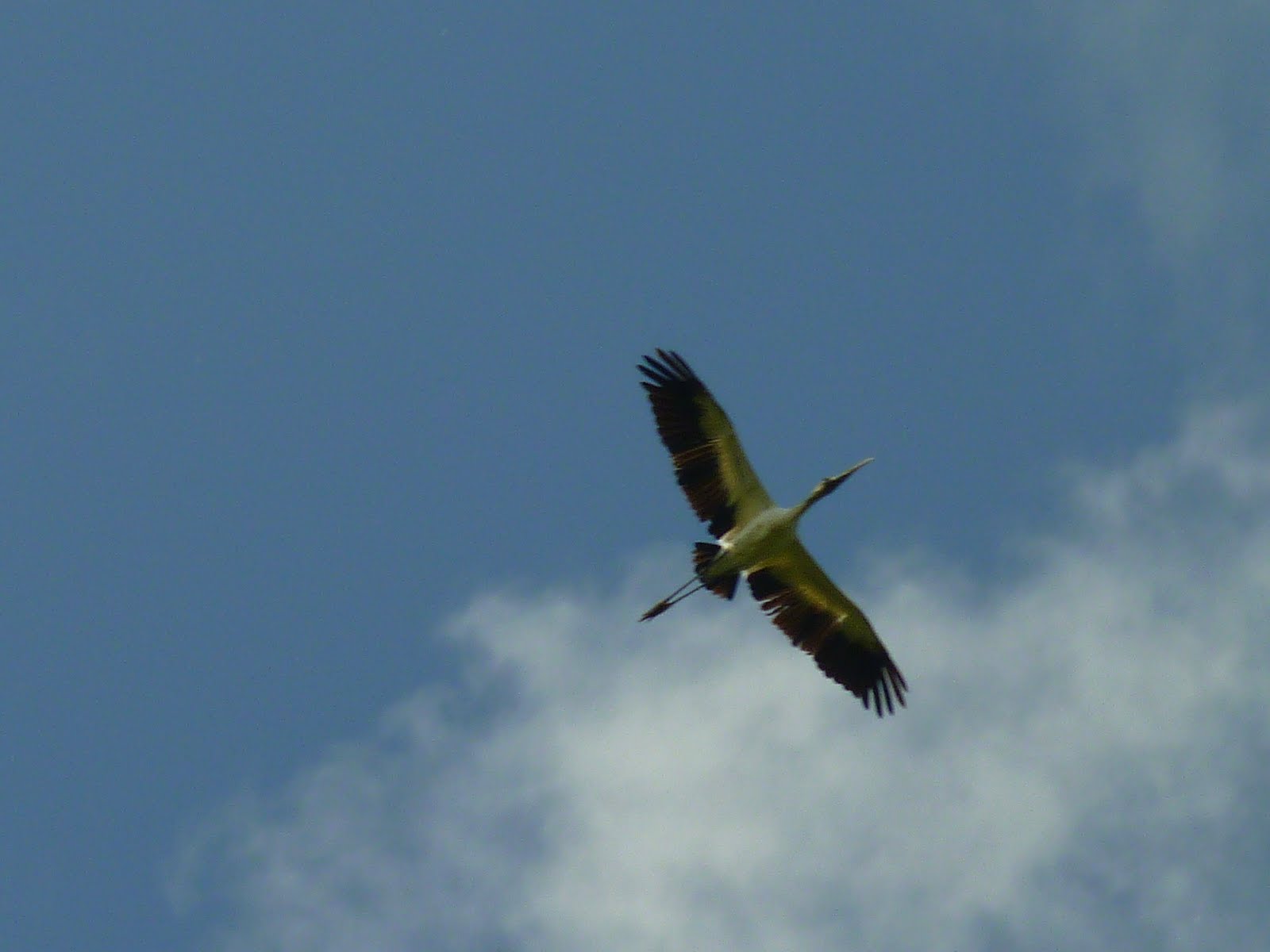
I went today to see if I could find Wood Storks, and also to check the property for potential later in the summer & fall. On one of our field trips last fall, we had excellent numbers of Storks. I didn't see any storks today, but there was plenty of water and the trees and undergrowth was very overgrown -- excellent weed habitat :-) My best bird of the day was one I couldn't even get a picture of -- a singing male Painted Bunting. Oh, what a bird.

I'll definitely be going back later this year... The rainbow was nice bonus -- one of the perks for birding in the rain.
Monday, June 28, 2010

Touch and Go!


Tree Swallow chick being fed by parent
Near Hog Island, Maine
June 2010

Monday, May 31, 2010

Swamp Song

Black Lake, near Campti, Louisiana on a quiet Sunday morning
(as always, click on each picture to see a larger version)

Northern Parula
This beautiful warbler nests in Spanish Moss
Some kind of huge swamp spider. I couldn't tell until I saw this picture on the computer that it was eating a dragonfly or damselfly. The beast was at least 3 inches from stem to stern. Arachnophobic's nightmare.
It was so creepy and intriguing that I had to enlarge it so you could see more detail. Note the bristles on its legs and the multiple eyes. I wish I'd had the nerve to get even closer but I was afraid it'd jump on me.
Beautiful and serene

Yellow-pop sings its little heart out!

The cold winter killed many of the invasives in Black Lake. In years past, this area was thick with water hyacinth and others.
Little Blue Heron stakes out breakfast
A bromeliad? Well...kinda...this is the miniscule flower (less than half inch across) of the Spanish Moss!
Dragonfly pauses and reflects
Under the boat shed
Interesting perspective...from the dock to the house

This fox squirrel dropped in about 6 feet from where I was sitting quietly to investigate. He was none to happy with the intrusion.

Monday, May 17, 2010

Bird Observation at Sherburne South Farm


Recently attended a meeting with folks from the Army Corps of Engineers and the LA Wildlife and Fisheries department to discuss a project they're considering for Sherburne South Farm Wildlife Management Area. They want to build an observation platform and asked for input from the birding community. They also want our help -- the plans call for them to get it started and then recruit volunteers to help with the final construction. Stay tuned!

The selected location be ideal for a 360 degree view of the water compounds. Perfect for the Wood Stork and Wading Bird event in summer, for shorebird viewing in fall, and for waterfowl viewing in winter.

Sherburne South Farm is located a couple miles north of the Ramah-Maringuoin exit off Interstate-10 in Iberville parish Louisiana.

Thursday, April 29, 2010

What're you squawking about??

Complaint of a Moorhen from Jane Patterson on Vimeo.

This Common Moorhen was not happy that I was able to get so close...not sure if the alarms were for itself or if had a mate or chicks that may have been hidden in the vegetation.

Observed near the backside of the rookery near Jefferson Island, LA.

A Look at a Rookery

Scenes from a rookery from Jane Patterson on Vimeo.

"I'll get you, my pretty!"

An alligator patrols beneath a wading bird rookery near Jefferson Island, LA. Little Blue Herons, Tri-colored Herons, Cattle, Snowy, Great Egrets, and a few Roseate Spoonbills are all nesting here, as well as a few Neotropic Cormorants and Anhingas.

Where have all the Spoonbills gone?

Spoonbill Convention from Jane Patterson on Vimeo.

This collection of Roseate Spoonbills was seen hanging out near the small rookery near Jefferson Island, Louisiana. They didn't seem to be interested in pairing off for breeding, which was odd. Mostly they seemed to be pestered by flying insects (buffalo gnats?). There were a few spoonbill nests stirred in with the other wading birds, but not many at this location.

Monday, April 26, 2010

Fuzzy little Red-tails

The hawk's nest is hidden well at the top of a tall cypress. I wasn't sure, for a while, if there was anything in the nest, but then a head poked up...and then a second. A few trees over, the parent screeched at me...I didn't stay long...


Red Tailed Hawk nest in cypress tree from Jane Patterson on Vimeo.

There were two nestlings visible and they seemed to be curious about me. Mom was not amused, however, and she cussed at me big time for being too close to her babies.

The Swamp Canary sings

The Swamp Canary sings from Jane Patterson on Vimeo.

The Prothonotary Warbler is a welcome sight, and sound, in south Louisiana. Its song is a sure sign of spring, as it finds its way to our swamps and bayous and sets up nesting territories. This one found a lovely snack!

Sunday, April 25, 2010

Swamp Scenes

Painted Bunting - this is how a rainbow colored bird hides in a green tree
This turtle has had a hard life...still kicking

Picture perfect stream


Have a seat


Cypress-Tupelo Swamp


Virgina sweet-spire


Stand of Indian Pink


Close up of Indian Pink

Penstemon


Thistle

Red Swamp Maple - leaf bud

Spider Lily

Friday, April 16, 2010

Cuckoos and Catbirds


Beautiful day for birding on Grand Isle today. Even though I arrived mid-day, the weather was sunny but not too hot, a little breezy, and altogether pleasant. The woods are all fresh and green. I did make a pass to the state park end of the island and picked up a few shorebirds, but spent most of my time in Sureway woods. Birds were not there in great number, but there were some good ones. Unfortunately, most of them eluded my camera. Catbirds are probably the most plentiful, but there were also 3 types of vireos, both Summer and Scarlet Tanagers, Indigo Buntings and Blue Grosbeaks, a several warblers -- coolest for me were the Northern Waterthrush and the Black-throated Green. There were also several Cuckoos, though try as we might, we could not make any of them into Black-billed.